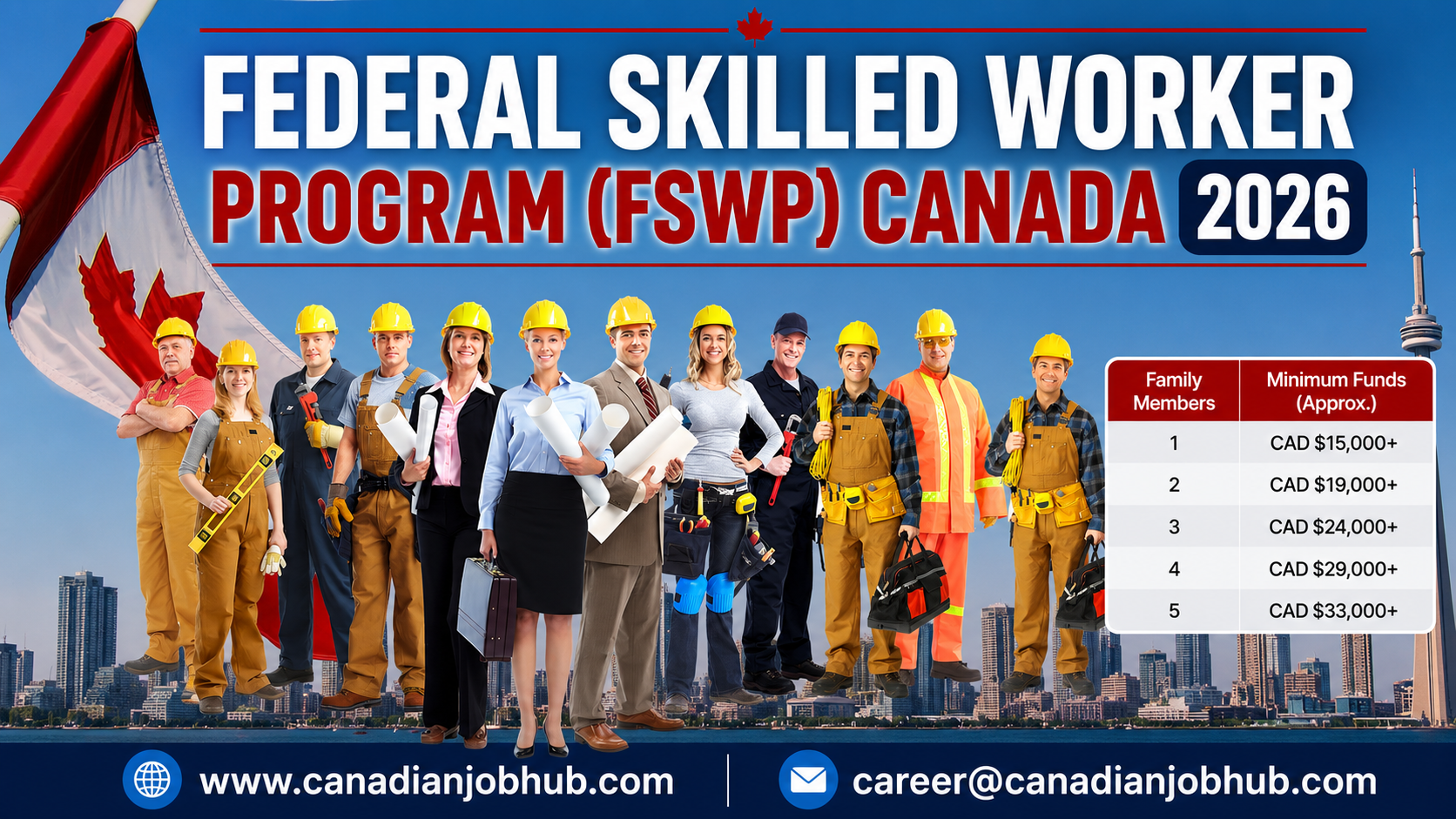


Canada continues to experience one of the largest construction booms in its history. Massive investments in housing developments, transportation infrastructure, renewable energy projects, commercial buildings, hospitals, schools, and industrial facilities have created thousands of job openings across the country.
Due to an aging workforce and ongoing labour shortages, Canadian employers are increasingly hiring skilled foreign workers through LMIA-approved jobs and employer-sponsored work permits. Many companies are unable to find enough qualified local workers, making international recruitment an important part of Canada’s construction industry.
Whether you’re an experienced carpenter, electrician, plumber, welder, heavy equipment operator, construction labourer, or project manager, Canada offers excellent career opportunities, competitive salaries, and pathways toward permanent residency.
This comprehensive guide explains everything you need to know about Construction Jobs in Canada in 2026, including salaries, eligibility requirements, visa sponsorship options, LMIA jobs, work permits, application strategies, and long-term immigration pathways.
Why Canada Needs Construction Workers
Canada’s construction industry is growing rapidly due to several major factors:
- Population growth
- Housing shortages
- New infrastructure projects
- Expansion of renewable energy
- Commercial developments
- Industrial construction
- Retirement of experienced tradespeople
- Government infrastructure investments
These factors have resulted in thousands of vacancies that employers are filling through international recruitment.
Click Here: Canada Visitor Visa to PR 2026 – Complete Guide to Permanent Residency
Benefits of Working in Canada’s Construction Industry
Construction workers enjoy numerous advantages, including:
- High salaries
- Overtime pay
- Health insurance
- Pension contributions
- Paid vacations
- Stable employment
- Union benefits
- Career advancement
- Employer-sponsored training
- Permanent residency opportunities
Many employers also provide:
- Accommodation assistance
- Transportation
- Safety equipment
- Relocation support
- Visa sponsorship
Most In-Demand Construction Jobs in Canada 2026
Canada needs workers across nearly every construction trade.
1. Construction Labourers
Responsibilities include:
- Site preparation
- Material handling
- Equipment assistance
- Demolition
- Concrete work
- General site maintenance
Average Salary:
CAD $42,000–$65,000 annually
2. Carpenters
Tasks include:
- Building frameworks
- Installing doors
- Roofing
- Flooring
- Finishing interiors
- Reading blueprints
Average Salary:
CAD $55,000–$90,000 annually
3. Electricians
Responsibilities:
- Wiring
- Electrical systems
- Maintenance
- Commercial installations
- Residential projects
Average Salary:
CAD $70,000–$110,000 annually
4. Plumbers
Duties include:
- Pipe installation
- Water systems
- Drainage
- Heating systems
- Commercial plumbing
Average Salary:
CAD $65,000–$105,000 annually
5. Welders
Work involves:
- Structural steel
- Pipeline welding
- Manufacturing
- Fabrication
- Industrial construction
Average Salary:
CAD $60,000–$95,000 annually
6. Heavy Equipment Operators
Operate:
- Excavators
- Bulldozers
- Cranes
- Loaders
- Backhoes
- Graders
Average Salary:
CAD $65,000–$110,000 annually
7. Crane Operators
Operate tower cranes and mobile cranes.
Average Salary:
CAD $85,000–$140,000 annually
8. Concrete Finishers
Tasks include:
- Concrete pouring
- Surface finishing
- Sidewalk construction
- Foundations
Average Salary:
CAD $55,000–$85,000 annually
9. Roofers
Average Salary:
CAD $55,000–$90,000 annually
10. Construction Supervisors
Responsibilities include:
- Managing workers
- Site safety
- Scheduling
- Quality control
- Project coordination
Average Salary:
CAD $80,000–$130,000 annually
Highest Paying Construction Provinces
Top destinations include:
| Province | High Demand |
|---|---|
| Alberta | ★★★★★ |
| British Columbia | ★★★★★ |
| Ontario | ★★★★★ |
| Saskatchewan | ★★★★☆ |
| Manitoba | ★★★★☆ |
| Nova Scotia | ★★★★☆ |
| New Brunswick | ★★★☆☆ |
| Newfoundland & Labrador | ★★★★☆ |

LMIA Construction Jobs
Many employers hire foreign workers using Labour Market Impact Assessments (LMIA).
An LMIA confirms:
- No Canadian worker is available
- Employer can legally hire foreign workers
- Job meets wage standards
- Employment conditions are approved
Positive LMIA jobs significantly improve work permit approval chances.
Canada Work Permit Options
Construction workers commonly immigrate through:
Temporary Foreign Worker Program (TFWP)
Ideal for LMIA-supported jobs.
Provincial Nominee Programs (PNPs)
Many provinces nominate skilled construction workers.
Express Entry
Suitable for experienced skilled trades workers.
Atlantic Immigration Program
Available in Atlantic Canada.
Rural Community Immigration
Smaller communities recruit skilled construction workers.
Eligibility Requirements
Don’t miss these trending job opportunities in 2026. Visit: 🌐www.canadianjobhub.com/ or send your updated CV to Apply Now. 📨career@canadianjobhub.com
Applicants generally need:
- Valid passport
- Relevant experience
- Job offer
- Educational qualifications (if applicable)
- English or French proficiency
- Medical examination
- Police clearance
- Financial documentation
Education Requirements
Requirements vary.
Labourers often require:
- High school education
Skilled trades usually require:
- Apprenticeship
- Technical diploma
- Trade certification
- Several years of work experience
Experience Requirements
Most employers prefer:
- 1–5 years of experience
Senior positions require:
- 5–10 years
English Language Requirements
Basic English is usually sufficient for:
- Labourers
- Helpers
Higher positions may require:
- IELTS
- CELPIP
- French (Quebec)
Average Construction Salaries
| Position | Annual Salary |
|---|---|
| Labourer | CAD 42,000–65,000 |
| Carpenter | CAD 55,000–90,000 |
| Electrician | CAD 70,000–110,000 |
| Plumber | CAD 65,000–105,000 |
| Welder | CAD 60,000–95,000 |
| Heavy Equipment Operator | CAD 65,000–110,000 |
| Supervisor | CAD 80,000–130,000 |
| Project Manager | CAD 100,000–160,000 |
Best Canadian Employers Hiring Construction Workers
Large employers include:
- PCL Construction
- EllisDon
- Ledcor Group
- Graham Construction
- Aecon Group
- Bird Construction
- Kiewit Canada
- Chandos Construction
- Turner Construction
- Clark Builders
Where to Find Construction Jobs
Popular websites include:
- Job Bank Canada
- Canadian Job Hub
- Indeed Canada
- LinkedIn Jobs
- Workopolis
- Monster Canada
- Glassdoor
- Eluta
- Employer career websites
Step-by-Step Application Process
Step 1
Prepare a Canadian-style resume.
Step 2
Collect:
- Passport
- Certificates
- References
- Trade licenses
Step 3
Apply for LMIA-supported jobs.
Step 4
Attend interviews.
Step 5
Receive job offer.
Step 6
Employer applies for LMIA (if required).
Step 7
Apply for work permit.
Step 8
Receive visa approval.
Step 9
Travel to Canada.
Step 10
Start employment.
Can Family Members Come?
Yes.
Eligible workers may bring:
- Spouse
- Common-law partner
- Dependent children
Your spouse may qualify for an open work permit, while children may be eligible to study in Canada.
Pathway to Permanent Residency
Many construction workers become permanent residents through:
- Express Entry
- Provincial Nominee Programs
- Canadian Experience Class
- Atlantic Immigration Program
- Rural Community Immigration Pilot
Canadian work experience significantly improves PR eligibility.
Tips to Increase Your Hiring Chances
- Gain trade certifications.
- Build a Canadian-style resume.
- Improve English skills.
- Apply to LMIA-approved employers.
- Highlight safety training.
- Obtain first aid certification.
- Be flexible about province and location.
- Keep documents organized.
More Opportunities:
- Canada Visitor Visa to PR 2026 – Complete Guide to Permanent Residency
- Trades Jobs in Canada 2026 | Skilled Trades Careers, LMIA & Work Visa Guide
- IT Jobs in Canada 2026: Software Developer, Data Scientist & AI Engineer
- Canada Tech Talent Strategy 2026 Accelerated Work Permits for US H-1B Holders
- Canada PR Pathway 2026: Complete Guide to Permanant Residency
- Canada Work Visa Apply Online 2026: Complete Step-by-Step Guide for Foreign Workers
- Canada New Immigration Policy 2026 – Latest Rules, PR, Work Permit & Visa Guide
- Top 10 In-Demand Jobs in Canada 2026: High-Paying Careers, LMIA & Visa Sponsorship Guide
- Canada Provincial Nominee Program (PNP) 2026: Complete Guide to Apply & Get Permanent Residency
- Canada Provincial Nominee Program (PNP) 2026: Complete Guide to Apply & Get Permanent Residency
- Austria Job Seeker Visa Explained (Easy Guide 2026)
- Canada Hotel Jobs for Foreigners 2026: Complete Guide to Work and Build a Career in Canada’s Hospitality Industry
- Germany Opportunity Card Explained (Latest Update 2026)
- Top 20 Canada Interview Questions for Foreign Workers (2026 Guide)
- Germany Work Visa 2026: Complete Process & Requirements for Foreign Workers
- Canada Seasonal Worker Visa Process 2026 – Complete Step-by-Step Guide for Foreign Workers
- How to Get a Schengen Work Visa in 2026 (Step-by-Step Guide)
- Urgent Canada Farm Worker Jobs 2026 – Apply Now with Visa Sponsorship
- How to Get an Oman Visa Without an Agent 2026.
- LMIA Jobs in Canada 2026: Complete Guide to Visa Sponsorship, Work Permits & High-Demand Careers
Common Mistakes to Avoid
- Applying for jobs without meeting qualifications.
- Sending generic resumes.
- Ignoring LMIA requirements.
- Providing incomplete documentation.
- Missing work permit deadlines.
- Overlooking trade licensing requirements.
Frequently Asked Questions (FAQs)
1. Can foreigners apply for construction jobs in Canada?
Yes. Many Canadian employers hire skilled foreign workers through LMIA-supported positions and employer-sponsored work permits.
2. Do construction jobs in Canada offer visa sponsorship?
Yes. Many employers provide visa sponsorship, particularly for occupations experiencing labour shortages.
3. What is the average salary for construction workers in Canada?
Depending on the role and experience, salaries generally range from CAD 42,000 to CAD 140,000 per year.
4. Do I need IELTS for a Canadian construction work visa?
Language requirements depend on the immigration program. Some work permit pathways do not require IELTS, while permanent residency programs often require approved language test results.
5. Can construction jobs lead to permanent residency?
Yes. Skilled construction workers can qualify for permanent residency through Express Entry, Provincial Nominee Programs (PNPs), and other immigration pathways.
Conclusion
Canada’s construction industry presents exceptional opportunities for skilled foreign workers in 2026. With strong demand across trades such as carpentry, electrical work, plumbing, welding, heavy equipment operation, and project management, employers continue to recruit internationally to address labour shortages. Competitive salaries, employer-sponsored work permits, LMIA-supported positions, and multiple permanent residency pathways make Canada one of the most attractive destinations for construction professionals worldwide.
If you have the right skills, experience, and a willingness to work in a growing industry, now is an excellent time to explore construction jobs in Canada. By preparing a strong application, targeting reputable employers, and understanding the Canadian immigration process, you can build a rewarding career while creating a long-term future for yourself and your family.