Federal Skilled Worker Program (FSWP)
Canada continues to rank among the world’s top immigration destinations, offering skilled professionals excellent career opportunities, competitive salaries, free public healthcare, quality education, and one of the highest standards of living. Among Canada’s immigration pathways, the Federal Skilled Worker Program (FSWP) remains one of the most popular and reliable routes for qualified foreign workers seeking Permanent Residence (PR).
If you’re planning to immigrate to Canada in 2026, understanding the Federal Skilled Worker Program is essential. Whether you’re an engineer, IT professional, nurse, accountant, teacher, healthcare worker, construction specialist, or skilled tradesperson, the FSWP could provide your pathway to becoming a Canadian permanent resident.
This comprehensive guide explains everything you need to know about the Federal Skilled Worker Program, including eligibility requirements, Express Entry, CRS scores, language tests, required documents, application process, settlement funds, processing times, benefits, and expert tips to improve your chances of receiving an Invitation to Apply (ITA).
What is the Federal Skilled Worker Program (FSWP)?
The Federal Skilled Worker Program (FSWP) is one of Canada’s three major federal immigration programs managed through the Express Entry system.
It is specifically designed for skilled professionals who have gained work experience outside Canada and wish to immigrate permanently.
Unlike some immigration programs, applicants do not need Canadian work experience to qualify. Instead, candidates are assessed using factors such as:
- Education
- Skilled work experience
- Language ability
- Age
- Adaptability
- Arranged employment
Applicants who meet the minimum eligibility requirements can create an Express Entry profile and compete for Permanent Residence invitations.
Click Here: Construction Jobs in Canada 2026: Visa Sponsorship, LMIA Jobs, Salary & Work Visa Guide
Why Choose the Federal Skilled Worker Program?
The FSWP offers several advantages over many other immigration programs.
Benefits include:
- Direct pathway to Permanent Residence
- No Canadian work experience required
- Live and work anywhere in Canada (except Quebec)
- Bring your spouse and dependent children
- Access free healthcare
- Children receive free public education
- Eligibility for Canadian citizenship after meeting residency requirements
- Ability to sponsor eligible family members later
- Access to Canada’s strong labor market
Who Can Apply?
The program welcomes professionals from almost every country.
Popular occupations include:
- Software Developers
- Civil Engineers
- Mechanical Engineers
- Registered Nurses
- Doctors
- Pharmacists
- Teachers
- Accountants
- Financial Analysts
- Electricians
- Welders
- Carpenters
- Construction Managers
- Architects
- Data Scientists
- Cybersecurity Specialists
- Logistics Managers
- Marketing Professionals
- Agricultural Specialists
Minimum Eligibility Requirements
To qualify under the Federal Skilled Worker Program, applicants must satisfy several conditions.
1. Skilled Work Experience
Applicants need at least:
- One year of continuous full-time work experience
- Or equivalent part-time experience
- Within the past 10 years
The work must fall under eligible TEER occupations in Canada’s National Occupation Classification (NOC).
2. Language Requirements
Applicants must demonstrate English or French language proficiency.
Accepted tests include:
English
French
Minimum requirement:
Canadian Language Benchmark (CLB) 7
Higher language scores significantly improve CRS rankings.
3. Education
Applicants must have completed:
- Secondary education (minimum)
Higher education earns additional points.
Foreign educational credentials require an Educational Credential Assessment (ECA).
Approved organizations include:
- WES
- IQAS
- ICES
- CES
- MCC (medical professionals)
- PEBC (pharmacists)
4. Settlement Funds
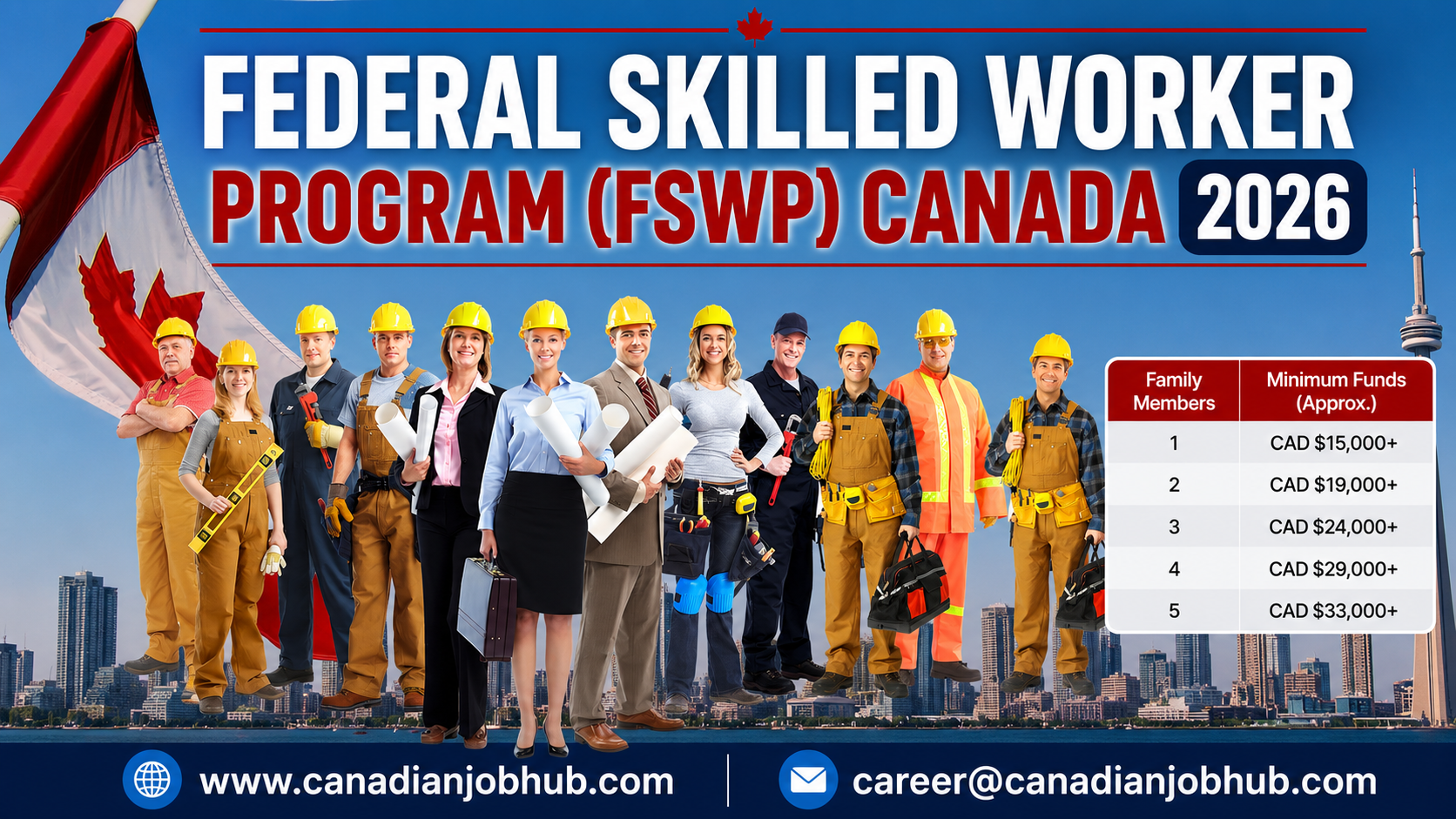
Unless exempt, applicants must prove sufficient settlement funds.
The amount depends on family size.
Examples include:
| Family Members | Minimum Funds (Approx.) |
|---|---|
| 1 | CAD $15,000+ |
| 2 | CAD $19,000+ |
| 3 | CAD $24,000+ |
| 4 | CAD $29,000+ |
| 5 | CAD $33,000+ |
These figures are updated periodically.
5. Medical Examination
Applicants must complete an immigration medical examination performed by an approved panel physician.
6. Police Clearance Certificates
Police certificates are required from countries where applicants have lived for six months or longer after turning 18.
Understanding the 67-Point Eligibility System
Before entering Express Entry, FSWP applicants must score at least 67 points out of 100.
Points are awarded for:
| Factor | Maximum Points |
|---|---|
| Education | 25 |
| Language Skills | 28 |
| Work Experience | 15 |
| Age | 12 |
| Arranged Employment | 10 |
| Adaptability | 10 |
Meeting 67 points only qualifies you for Express Entry.
Receiving PR depends on your Comprehensive Ranking System (CRS) score.
How Express Entry Works
The Express Entry process includes:
Step 1
Take an approved language test.
Step 2
Obtain an Educational Credential Assessment.
Step 3
Calculate eligibility.
Step 4
Create an Express Entry profile.
Step 5
Receive a CRS score.
Step 6
Wait for an Invitation to Apply (ITA).
Step 7
Submit your Permanent Residence application.
Step 8
Complete biometrics and medical examination.
Step 9
Receive Confirmation of Permanent Residence (COPR).
Step 10
Move to Canada.
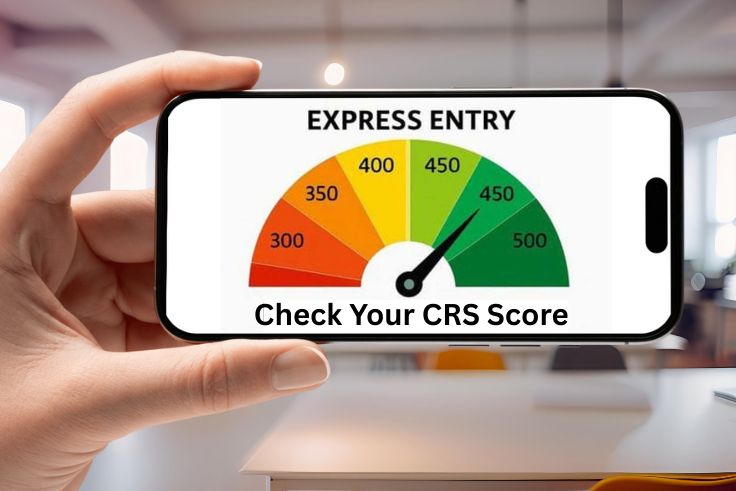
Understanding CRS Score
After entering Express Entry, candidates receive a CRS score.
Factors include:
- Age
- Education
- Language
- Canadian work experience
- Foreign work experience
- Spouse qualifications
- Provincial nomination
- Job offer
- French language ability
Higher CRS scores increase the chance of receiving an ITA.
How to Improve Your CRS Score
Ways to boost your score include:
- Retake IELTS for higher scores
- Learn French
- Complete another educational qualification
- Gain additional work experience
- Secure a valid Canadian job offer
- Apply for Provincial Nominee Programs (PNPs)
- Improve spouse’s language score
- Obtain Canadian education
Documents Required
Don’t miss these trending job opportunities in 2026. Visit: 🌐www.canadianjobhub.com/ or send your updated CV to Apply Now. 📨career@canadianjobhub.com
Applicants generally need:
- Passport
- Language test results
- Educational Credential Assessment
- Degree certificates
- Employment reference letters
- Payslips (if applicable)
- Resume/CV
- Police certificates
- Medical examination
- Birth certificate
- Marriage certificate (if applicable)
- Children’s birth certificates
- Proof of funds
- Digital photographs
Processing Time
Average timelines:
| Stage | Estimated Time |
|---|---|
| Language Test | 1–2 months |
| ECA | 1–3 months |
| Express Entry Profile | 1 day |
| ITA Wait | Depends on CRS |
| PR Application | Around 6 months (varies) |
Actual processing times depend on application volume and individual circumstances.
Occupations Frequently Selected
High-demand sectors include:
- Healthcare
- Information Technology
- Engineering
- Skilled Trades
- Construction
- Transportation
- Agriculture
- Manufacturing
- Finance
- Education
Benefits After Receiving PR
Permanent Residents enjoy:
- Live anywhere in Canada
- Work for almost any employer
- Access universal healthcare
- Free public education
- Social benefits
- Pathway to citizenship
- Family sponsorship opportunities
- Employment protections
Common Reasons for Refusal
Applications may be refused because of:
- Incorrect information
- Missing documents
- Low language scores
- Ineligible work experience
- Insufficient settlement funds
- Medical inadmissibility
- Criminal inadmissibility
- Misrepresentation
Carefully preparing your application reduces these risks.
More Opportunities:
- Construction Jobs in Canada 2026: Visa Sponsorship, LMIA Jobs, Salary & Work Visa Guide
- Canada Visitor Visa to PR 2026 – Complete Guide to Permanent Residency
- Trades Jobs in Canada 2026 | Skilled Trades Careers, LMIA & Work Visa Guide
- IT Jobs in Canada 2026: Software Developer, Data Scientist & AI Engineer
- Canada Tech Talent Strategy 2026 Accelerated Work Permits for US H-1B Holders
- Canada PR Pathway 2026: Complete Guide to Permanant Residency
- Canada Work Visa Apply Online 2026: Complete Step-by-Step Guide for Foreign Workers
- Canada New Immigration Policy 2026 – Latest Rules, PR, Work Permit & Visa Guide
- Top 10 In-Demand Jobs in Canada 2026: High-Paying Careers, LMIA & Visa Sponsorship Guide
- Canada Provincial Nominee Program (PNP) 2026: Complete Guide to Apply & Get Permanent Residency
Tips for a Successful FSWP Application
- Start preparing documents early.
- Achieve the highest possible IELTS or CELPIP score.
- Ensure your work experience matches the correct NOC code.
- Keep employment records organized.
- Maintain sufficient settlement funds.
- Monitor Express Entry draws regularly.
- Consider Provincial Nominee Programs for additional CRS points.
- Submit accurate and truthful information.
Frequently Asked Questions (FAQs)
Is the Federal Skilled Worker Program open in 2026?
Yes. The FSWP continues to operate through Canada’s Express Entry system, subject to current immigration policies.
Do I need a Canadian job offer?
No. A job offer is not mandatory, though it can improve your CRS score if it meets program requirements.
What is the minimum IELTS score?
Applicants generally need at least CLB 7, which corresponds to qualifying scores in IELTS General Training.
Can I include my spouse and children?
Yes. Eligible spouses and dependent children can be included in your PR application.
Can I apply without Canadian work experience?
Yes. The FSWP is specifically intended for skilled workers with foreign work experience.
Conclusion
The Federal Skilled Worker Program (FSWP) Canada 2026 remains one of the strongest pathways to Canadian Permanent Residence for qualified professionals worldwide. With a transparent points-based system, access through Express Entry, and opportunities across sectors such as healthcare, IT, engineering, construction, education, and skilled trades, the program offers a clear route to building a future in Canada. By meeting the eligibility requirements, preparing accurate documentation, improving your language scores, and maintaining a competitive CRS profile, you can significantly increase your chances of receiving an Invitation to Apply and achieving your goal of living and working in Canada permanently.